How to Build an Emergency Fund in Namibia: A Simple Step-by-Step Guide
Posted on 29th August 2026 | Financial Tips
Learn how to build an emergency fund in Namibia, how much to save, where to start, and how emergency savings can protect you from unexpected expenses.
How to Build an Emergency Fund in Namibia: A Simple Step-by-Step Guide
What would happen if an unexpected expense landed on your doorstep tomorrow?
Your car suddenly needs an expensive repair.
A medical expense comes up.
An essential household appliance breaks.
You need to travel unexpectedly to support a family member.
Or perhaps an important bill arrives at exactly the wrong time.
For many people, the biggest problem isn’t necessarily the expense itself.
It’s the fact that there is no money set aside to deal with it.
This is where an emergency fund can make a major difference.
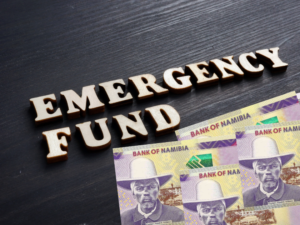
An emergency fund is money that you deliberately set aside for unexpected and necessary expenses. It gives you a financial buffer when life doesn’t go according to plan.
And you don’t have to be wealthy to start one.
Whether you can save N$50, N$100, N$500 or more each month, the important thing is to start building the habit.
In this guide, we’ll explain how to build an emergency fund in Namibia, how much you might aim to save, where to find money in your existing budget, and how an emergency fund can reduce your dependence on borrowing when unexpected expenses arise.
What Is an Emergency Fund?
An emergency fund is money that you set aside specifically for unexpected and necessary expenses.
It is different from money you save for:
- A holiday
- New clothes
- Entertainment
- A new phone
- A vehicle upgrade
- A planned purchase
Emergency savings are there for situations you didn’t plan for.
For example:
Your car breaks down and you need it repaired to get to work.
That’s potentially an emergency expense.
Buying a newer television because you would like one isn’t.
The purpose of an emergency fund is to give you a financial safety net when something unexpected happens.
Why Is an Emergency Fund Important?
Without emergency savings, an unexpected expense can quickly affect the rest of your monthly budget.
Imagine that you receive your salary and allocate it to:
- Housing
- Food
- Transport
- Electricity
- School expenses
- Existing financial commitments
Then your vehicle suddenly needs an urgent repair.
Where does the money come from?
Without savings, you may have to:
- Delay another payment
- Ask someone for financial help
- Sell something
- Use money intended for another necessity
- Consider borrowing
An emergency fund gives you another option.
Instead of immediately asking:
“Where can I find the money?”
you can potentially say:
“I have money set aside for situations like this.”
That difference can provide significant financial peace of mind.
How Much Should You Have in an Emergency Fund?
There isn’t one universal number that works for every household.
Your ideal emergency fund depends on factors such as:
- Your income
- Household size
- Monthly expenses
- Job stability
- Existing financial commitments
- Dependants
- How predictable your expenses are
Rather than becoming discouraged by a large savings target, start with smaller milestones.
For example:
First goal: N$500
Your first objective could simply be getting something into your emergency fund.
Second goal: N$1,000
Once you’ve reached N$500, work toward N$1,000.
Third goal: One month’s essential expenses
Eventually, you could aim to have enough savings to cover your essential expenses for a month.
Longer-term goal
As your financial situation improves, you can work toward building a larger financial buffer.
The important thing is to build progressively rather than waiting until you can afford to save a large amount.
Step 1: Start With Your Existing Budget
Before deciding how much to save, look at your current finances.
If you haven’t created a monthly budget yet, our guide: “How to Create a Monthly Budget That Actually Works in Namibia” is a good place to start.
Your budget should tell you:
- How much comes in
- How much goes out
- Where your money is being spent
- Which expenses are essential
- Which expenses could potentially be reduced
Once you understand your current financial position, you can identify an amount that is realistic to save.
Step 2: Choose a Realistic Monthly Amount
Don’t make your savings target so aggressive that you can’t maintain it.
For example, if your budget only allows you to comfortably save N$100 per month, start with N$100.
That’s better than deciding to save N$1,000, failing after one month, and abandoning the entire plan.
Consistency is more important than starting big. You can always increase the amount later.
Step 3: Treat Savings Like an Expense
One of the easiest ways to build a savings habit is to make it part of your monthly budget. Instead of saying:
“I’ll save whatever is left at the end of the month.”
consider:
“Saving is one of the things my income must cover this month.”
For example:
Monthly income: N$12,000
Emergency savings: N$300
That N$300 becomes part of your financial plan.
This approach can make saving more intentional.
Step 4: Save on Payday
Another useful strategy is to set money aside shortly after receiving your income.
Why?
Because if you wait until the end of the month, there may be nothing left.
When your income arrives:
- Cover essential commitments.
- Put your planned emergency savings aside.
- Allocate money for groceries and transport.
- Manage your remaining discretionary spending.
This creates a system rather than relying entirely on willpower.
Step 5: Find Small Expenses You Can Reduce
You don’t necessarily have to make dramatic lifestyle changes. Look for small areas where money is regularly disappearing.
For example:
- Unnecessary subscriptions
- Frequent takeaway meals
- Impulse purchases
- Unplanned shopping
- Unused memberships
- Excessive convenience spending
Suppose you identify N$200 in unnecessary monthly spending. Instead of spending it, you could redirect part or all of it toward your emergency fund.
Over twelve months:
N$200 × 12 = N$2,400
That’s how small changes become meaningful over time.
Step 6: Put Unexpected Money to Work
Sometimes you receive money that wasn’t part of your normal monthly income. For example:
- A bonus
- A gift
- A refund
- Additional work income
- Proceeds from selling something you no longer need
You don’t necessarily have to save all of it. But consider directing a portion toward your emergency fund.
For example: Unexpected income: N$2,000
You might decide to put: N$500–N$1,000 toward emergency savings and use the remainder for other priorities.
The exact amount depends on your circumstances.
Step 7: Keep Emergency Savings Separate
If your emergency savings sits in the same account you use for everyday spending, it can be tempting to spend it.
Consider keeping your emergency money separate from your normal spending money where practical.
The goal is to make it:
Accessible when you genuinely need it—but not so convenient that you spend it casually.
Step 8: Define What Counts as an Emergency
This is extremely important. If everything becomes an emergency, your emergency fund won’t last very long.
Before withdrawing money, ask:
Is this unexpected?
Did you plan for this expense?
Is it necessary?
Is it something that genuinely needs to be dealt with?
Is it urgent?
Can it reasonably wait?
Do I have another way to pay for it?
These questions can help you distinguish between a genuine emergency and an ordinary expense you simply hadn’t budgeted for.
Examples of Genuine Emergency Expenses
Depending on your circumstances, an emergency might include:
Vehicle Repairs
If your vehicle is essential for getting to work or managing your responsibilities, an unexpected breakdown could create an urgent financial need.
Medical Expenses
Unexpected healthcare costs can place pressure on a household budget.
Essential Home Repairs
A serious plumbing, electrical or structural problem may require immediate attention.
Family Emergencies
Unexpected travel or other necessary expenses may arise when a family member needs urgent assistance.
Essential Replacement Costs
Sometimes an item you rely on stops working and needs to be repaired or replaced.
What Should NOT Usually Be an Emergency?
Not every unexpected purchase is an emergency. Examples might include:
- A new television you suddenly want
- Expensive entertainment
- A holiday
- Designer clothing
- An upgraded smartphone
- Impulse shopping
The more disciplined you are about what qualifies as an emergency, the more useful your emergency fund becomes.
What If You Already Have Debt?
Building an emergency fund while managing debt can feel difficult. You may be tempted to put every available dollar toward debt. But having no emergency savings at all can leave you vulnerable to the next unexpected expense.
Consider finding a balance between:
- Meeting existing financial commitments
- Building a small emergency buffer
- Avoiding unnecessary new debt
Your exact approach will depend on your financial circumstances. The important thing is to have a plan rather than simply reacting to each financial problem as it appears.
What If I Can't Save Very Much?
Start anyway.
This is one of the most important principles of building financial resilience. You might think:
“N$100 isn’t enough to make a difference.”
But N$100 saved consistently is better than N$0.
For example:
N$100 × 12 months = N$1,200
N$250 × 12 months = N$3,000
N$500 × 12 months = N$6,000
These amounts can become meaningful financial buffers over time. The objective isn’t to become financially secure overnight.
It’s to become more financially prepared than you were yesterday.
What If an Emergency Happens Before You've Built Your Fund?
This is where reality matters.
You may be doing everything correctly and still encounter an emergency before your savings have grown enough.
If that happens, don’t panic. Start by assessing the situation.
Ask:
- How much money is actually required?
- Is the expense genuinely urgent?
- Can the cost be negotiated or paid in stages?
- Are there savings or resources available elsewhere?
- Can family or other support help?
- Are there responsible financial options available?
Our article “How to Handle Emergency Expenses Without Financial Stress in Namibia“ goes deeper into how to approach unexpected financial situations.
Should You Borrow Money Instead of Using an Emergency Fund?
If you have sufficient emergency savings, using your own money may mean you don’t need to borrow for that particular expense.
However, not everyone has an emergency fund yet.
And even people who save can eventually encounter an expense larger than their available savings.
If borrowing becomes a consideration, don’t make the decision simply because you’re under pressure.
Look carefully at:
- How much you actually need
- The total cost of borrowing
- Repayment requirements
- Your existing financial commitments
- Whether the repayment fits your budget
Our guide “Top Reasons People Apply for Short-Term Loans in Namibia (And When It Makes Sense)“ explains when short-term borrowing may be appropriate and when it may not be the best option.
Rebuilding Your Emergency Fund After Using It
Here’s something many people forget: Using your emergency fund isn’t failure.
That’s what it was created for.
If you use N$2,000 from your emergency savings to handle a genuine emergency, the next goal should be rebuilding it.
For example:
If your normal contribution is N$300 per month, continue saving N$300 each month.
If your circumstances allow you to temporarily increase that amount, you can rebuild the fund faster.
The important thing is to start again.
Make Emergency Savings a Family Habit
If you manage finances as a household, involve the family in your financial goals where appropriate.
Children can learn valuable lessons about money by understanding concepts such as:
- Saving
- Delayed gratification
- Planning
- Needs versus wants
- Preparing for unexpected situations
Financial education isn’t only about earning more money. It’s also about learning how to manage what you already have.
The Long-Term Benefit of an Emergency Fund
The biggest benefit of emergency savings isn’t simply having money in an account.
It’s having options.
When an unexpected expense appears, you may be able to deal with it without immediately disrupting:
- Your rent
- Your grocery budget
- Your school expenses
- Your other financial commitments
That can make a significant difference to your overall financial stability.
Why Financial Education Matters
At Silverline Financial Solutions, we believe that financial assistance and financial education should go hand in hand.
A loan can sometimes provide useful assistance when a genuine need arises.
But building a budget, saving consistently and preparing for emergencies can help reduce financial pressure in the first place.
The goal should not simply be to find money when a problem occurs.
The goal should also be to become better prepared for the next problem.
Final Thoughts
Building an emergency fund doesn’t require you to have a large salary. It requires a decision to start.
You might begin with N$50. Maybe N$100. Maybe N$500.
The amount matters—but the habit matters even more. Start with what you can afford. Make it part of your monthly budget. Keep it separate. Use it for genuine emergencies. And when you need to use it, rebuild it.
Over time, those small decisions can create a financial buffer that gives you greater confidence when life throws an unexpected expense your way.
You can’t always prevent financial emergencies. But you can become better prepared for them.
✅ Need Financial Assistance?
Even with careful budgeting and emergency savings, sometimes an unexpected expense can be larger than the resources available to you.
If you’re facing an urgent financial need and have considered your options carefully, you can complete our online loan application to begin the process.
If you’d like to understand your options before applying, contact our team today and we’ll be happy to assist.
Here are some Frequently Asked Questions
How much should I put into an emergency fund each month?
There is no single amount that works for everyone. Start with an amount that fits realistically into your budget and aim to increase it as your financial circumstances improve.
Where should I keep my emergency fund?
It should generally be kept somewhere that is reasonably accessible when a genuine emergency occurs but separate enough from everyday spending that you’re not tempted to use it casually.
Can I start an emergency fund with a small amount?
Absolutely. Starting with a small, sustainable amount is better than waiting until you can save a large amount.
What should an emergency fund be used for?
It should generally be reserved for unexpected and necessary expenses that you haven’t already budgeted for, such as urgent repairs or unforeseen essential costs.
Should I use my emergency fund to pay regular bills?
Your regular bills should normally be included in your monthly budget. An emergency fund is intended primarily for unexpected expenses rather than predictable monthly costs.
What happens if I use all my emergency savings?
Don’t become discouraged. If the expense was a genuine emergency, that is exactly what the fund was there for. Once the situation is resolved, start rebuilding the fund.